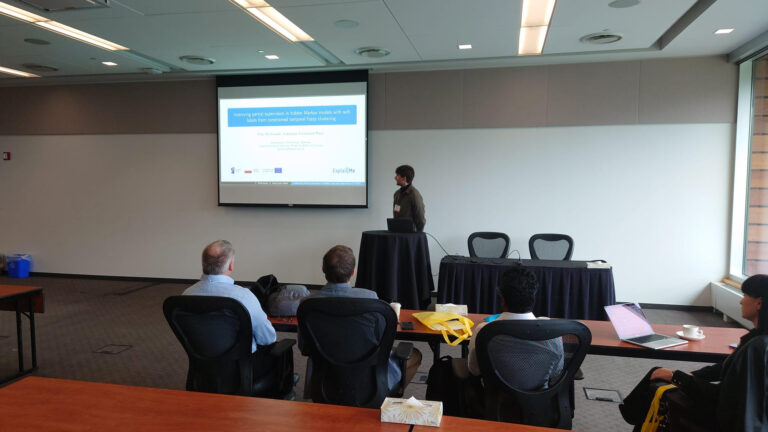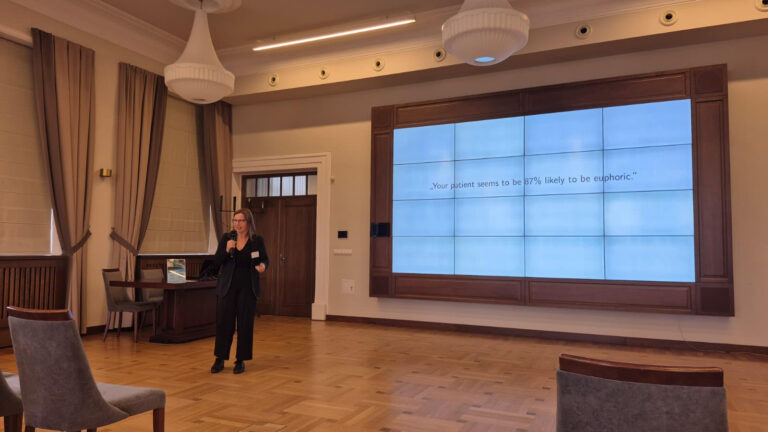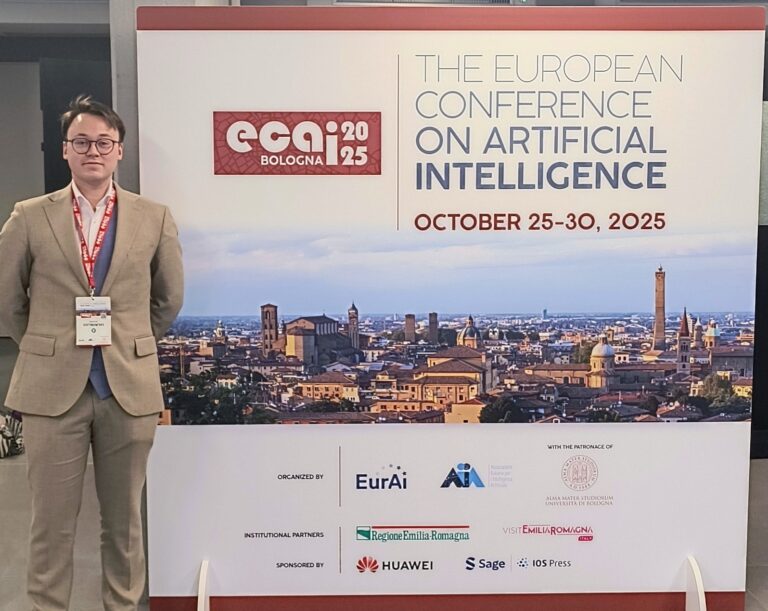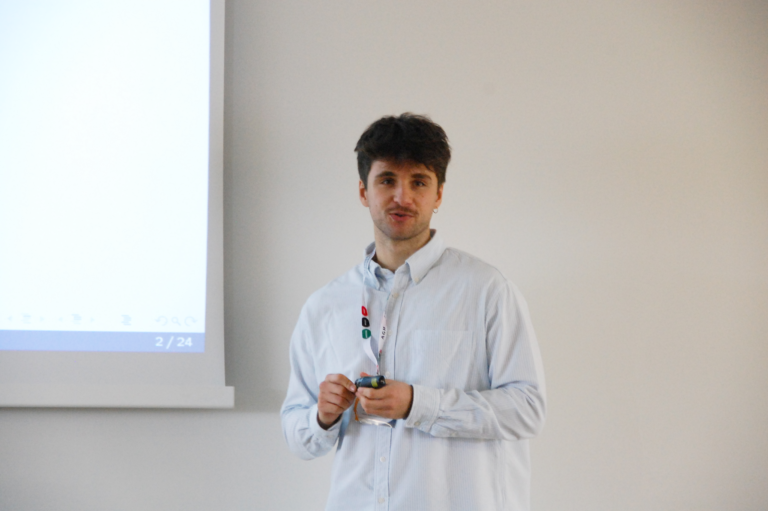

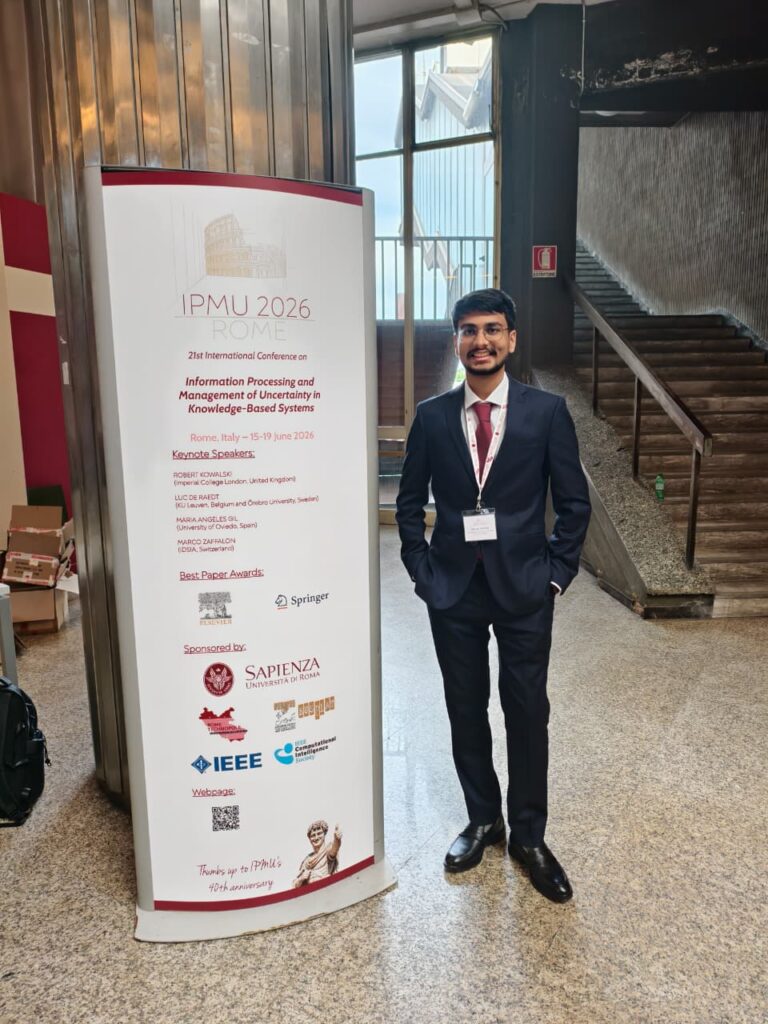
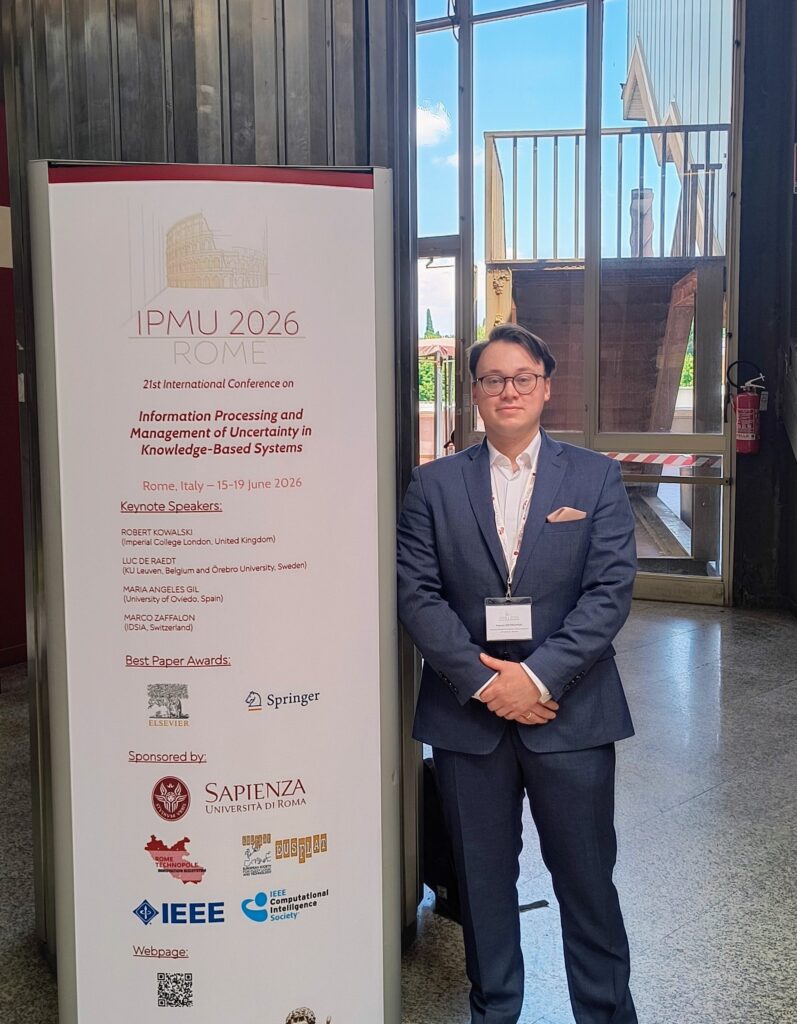
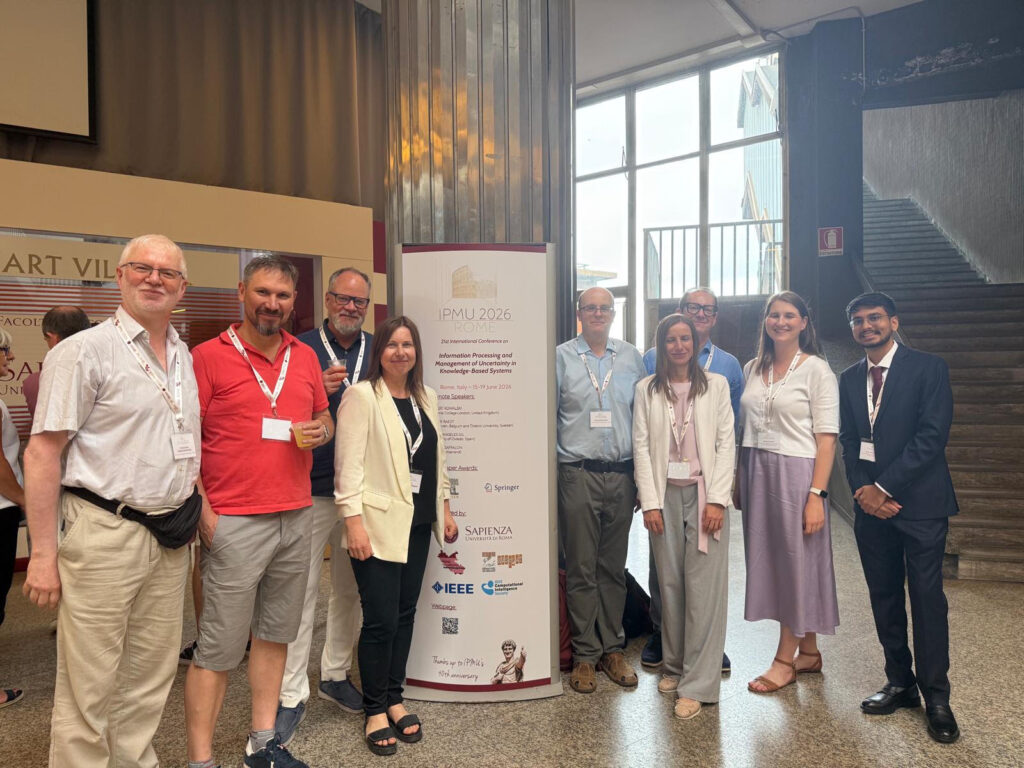
In June 2026, Marcin Ostrowski, Katarzyne Mis, Ansh Kapadia and Katarzyna Kaczmarek-Majer participated in the 21st International Conference on Information Processing and Management of Uncertainty in Knowledge-Based Systems (IPMU 2026), held at the Faculty of Economics of Sapienza University of Rome, Italy. The conference brought together researchers working on uncertainty modelling, fuzzy systems, explainable artificial intelligence, machine learning, and knowledge-based decision support.
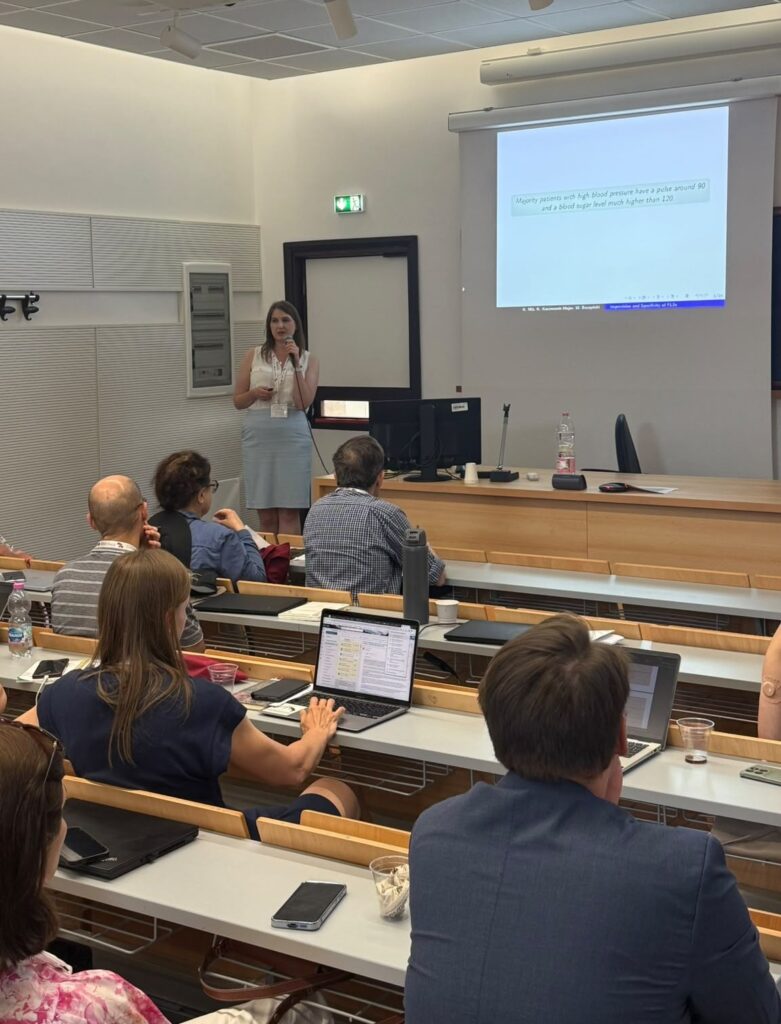
The team’s presentations were delivered as part of the Special Session “Soft Computing and Uncertainty Modeling in Statistical Inference and Data Analysis,” co-organised by Prof. Katarzyna Kaczmarek-Majer. The session focused on methodological challenges arising from complex data and different forms of uncertainty, including randomness, imprecision, and ambiguity. The session was a great success, featuring stimulating discussions on how statistical inference, machine learning, and soft-computing methods can support the analysis of complex and uncertain data.
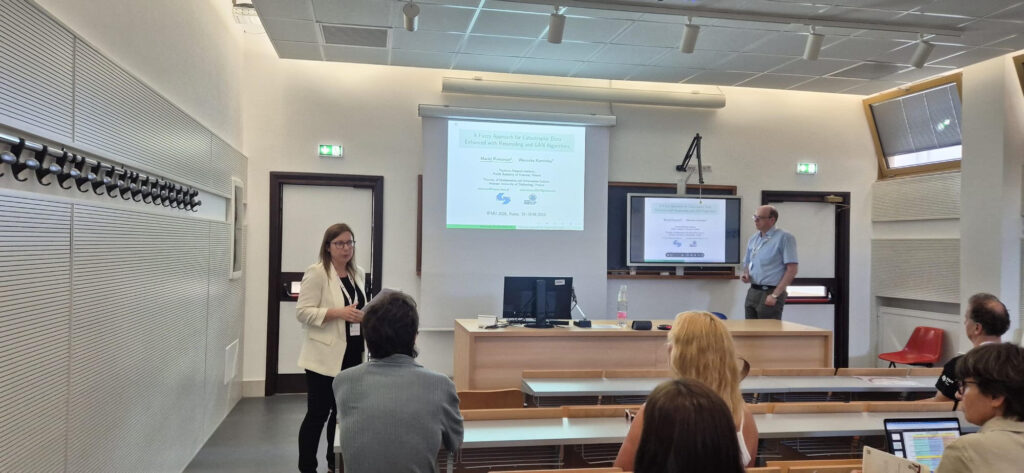
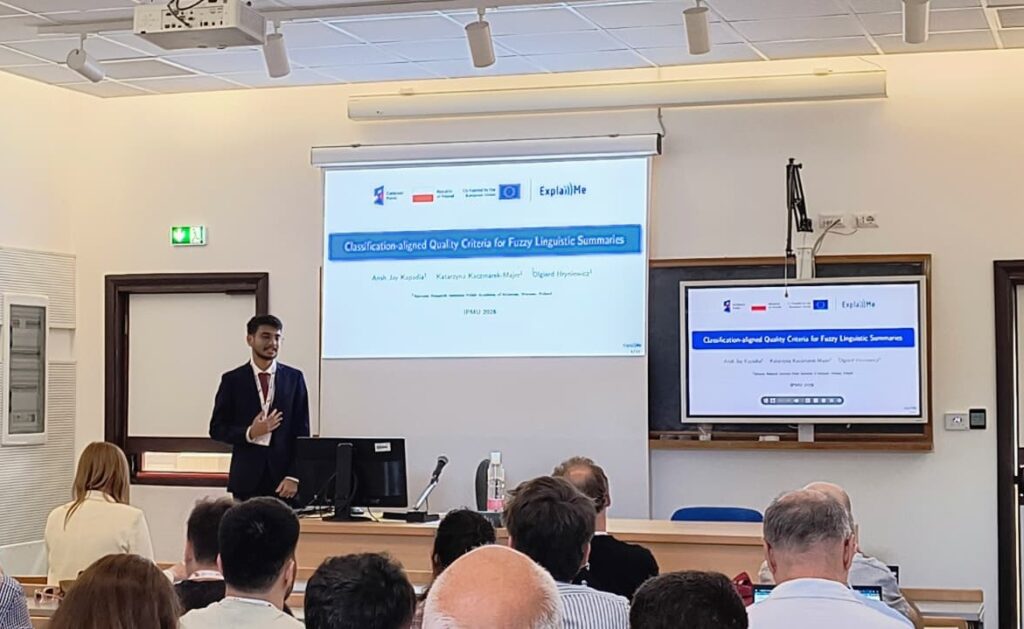
Ansh Kapadia presented the paper “Classification-aligned Quality Criteria for Fuzzy Linguistic Summaries,” co-authored with Prof. Katarzyna Kaczmarek-Majer and Prof. Olgierd Hryniewicz. The work addresses an important ExplainMe challenge: selecting natural-language explanations that are not only consistent with the data but also useful for distinguishing between patients’ mental states. It introduces two complementary criteria, Contrast and Surprise, to support the selection of more class-specific and clinically meaningful summaries.
The method was evaluated using speech-derived acoustic and behavioural data from individuals diagnosed with bipolar disorder, together with machine-learning models, SHAP explanations, and fuzzy linguistic summaries.
This was Ansh’s first academic conference and first conference presentation, making the experience especially significant. It gave him the opportunity to present his research to an international audience, participate in scientific discussions, and receive feedback from researchers working in related areas.
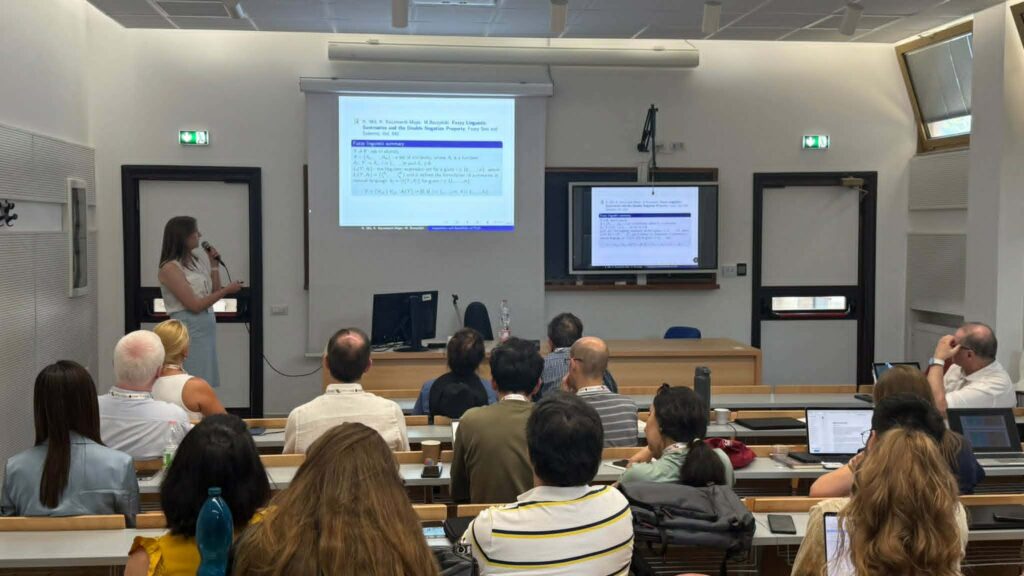
Katarzyna Miś presented “Imprecision and Specificity of Fuzzy Linguistic Summaries.” Her talk focused on qualitative criteria for linguistic summaries, including their generalisations and newly proposed approaches. She described IPMU as an excellent opportunity to discuss the team’s research and gain inspiring perspectives from other scientists.
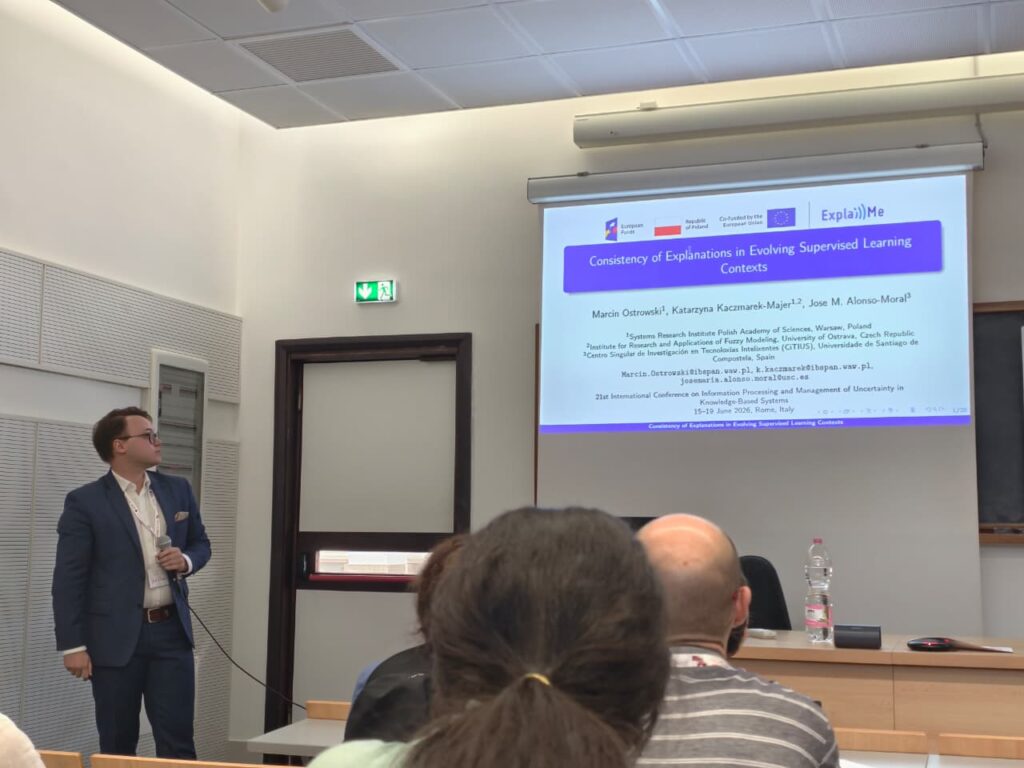
Marcin presented his work on assessing the temporal consistency of explanations in evolving supervised-learning environments. The proposed model-agnostic and explanation-agnostic index is designed to identify sudden changes, contradictions, and irregular fluctuations in streams of explanations that may affect user trust and decision-making. The presentation led to engaging discussions and useful feedback for further refining the method.
Beyond the presentations, IPMU 2026 offered valuable opportunities to engage with researchers from different countries and career stages working in fuzzy systems, uncertainty modelling, explainable AI, and machine learning. Formal sessions and informal conversations enabled an exchange of ideas, feedback, and perspectives that will help shape the team’s future research.

The conference was also a memorable cultural experience. Held in Rome, it provided an inspiring setting for scientific discussion and networking, while also giving participants the opportunity to experience the city’s historic architecture, ancient monuments, and distinctive atmosphere.